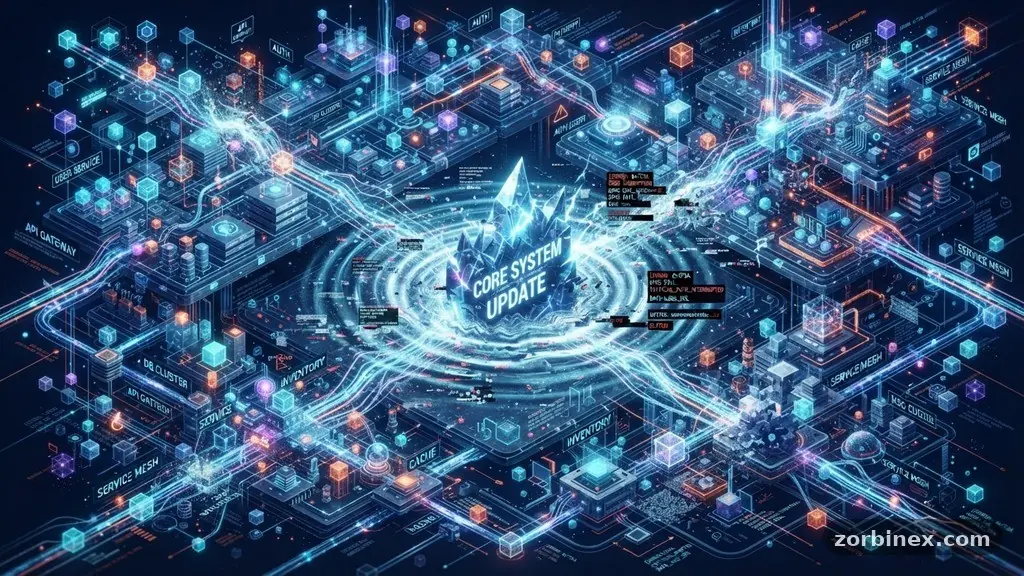
Software updates are intended to improve security and functionality, yet it is a common frustration that software updates sometimes cause unexpected problems for even the most tech-savvy users. When a system that worked perfectly yesterday suddenly fails after a patch, the culprit is often a hidden layer of complexity buried deep within the code. Understanding why these glitches occur helps users manage their expectations and troubleshoot more effectively when things go sideways.
From core system conflicts to minor driver errors, the reasons are as varied as the software itself. By exploring the technical reality behind these failures, you will gain a clearer perspective on why your devices sometimes stumble during an update.
The Complexity of Modern System Architecture
Modern computing relies on an incredibly dense web of interconnected components that must communicate flawlessly. Your computer is not just a single program; it is a massive stack of hardware, firmware, and software layers.
When a developer pushes an update, they are often modifying a tiny piece of this stack while assuming the rest remains static. If a change in the operating system kernel conflicts with a legacy driver, the entire machine can become unstable.
This fragility is inherent to how we build technology today. Developers rely on shared libraries and frameworks to save time and ensure standard functionality across different applications.
However, this creates a situation known as dependency hell, where one small update to a shared library ripples through dozens of unrelated programs. If an update changes a function that another program relies on, that program might crash or behave erratically.
Furthermore, software bloat plays a significant role in these stability issues. As applications grow over time, they accumulate layers of old code that are rarely tested against new operating system updates.
When a developer updates their software, they might inadvertently wake up dormant bugs in this legacy code. The result is a system that feels sluggish or prone to sudden, inexplicable errors.
The Role of Driver Conflicts and Hardware Compatibility
Hardware manufacturers are constantly racing to keep their drivers aligned with frequent operating system updates. A driver acts as a translator between your hardware—like your graphics card or printer—and the software running on your computer.
When an OS update changes how it manages communication, existing drivers may suddenly find themselves unable to translate requests correctly. This leads to the infamous “blue screen” or hardware that simply stops responding.
The challenge is magnified by the sheer variety of hardware combinations in the wild. A developer can test an update on a few hundred standard configurations, but it is impossible to account for every unique combination of custom-built PCs, peripherals, and internal components. If you have an older piece of hardware that is no longer being actively supported by its manufacturer, an update can easily break its functionality.
Driver conflicts are particularly difficult to diagnose because they often manifest as general system instability rather than a clear error message. You might notice your computer taking longer to wake from sleep or experiencing random stutters during video playback. These issues are almost always the result of a mismatch between the new OS instructions and the old hardware driver’s expectations.
Regression Testing and the Limits of Quality Assurance
Quality assurance teams perform rigorous regression testing before any update is released to the public. The goal of this testing is to ensure that new code does not break existing features that were working fine before.
Despite these efforts, some bugs inevitably slip through the cracks because the test environment cannot perfectly mirror the real world. Real-world usage involves thousands of user settings, background apps, and specific user behaviors that are hard to simulate.
When testers run a sandbox environment, they are looking for broad, system-breaking issues. They rarely have the time or resources to check how an update interacts with every obscure piece of third-party software a user might have installed. This is why a major update often works perfectly for most people but creates a disaster for a small percentage of users with specific software setups.
The pressure to release updates quickly also contributes to these oversight gaps. In the world of cybersecurity, waiting too long to patch a vulnerability can be dangerous, so developers are often forced to choose between perfect stability and timely protection. This trade-off means that some updates are pushed out with known, minor issues that developers hope to fix in a subsequent patch.
API Deprecation and Breaking Changes
Developers often use APIs to allow different programs to talk to one another. Over time, these APIs become outdated and are eventually marked for deprecation, meaning they are being phased out in favor of newer, more efficient methods.
If an application continues to rely on a deprecated API, an update that removes support for that old code will cause the application to break. This is a common source of “sudden” software failure.
When an API is removed, it is usually because it has become a security risk or a performance bottleneck. While the removal is good for the long-term health of the ecosystem, it is a nightmare for developers who have not updated their own software to use the new standards. If that software is no longer being maintained, it will simply stop working the moment the underlying system updates.
This cycle of change is necessary for progress, but it creates a permanent state of tension between stability and innovation. Users expect their old tools to work forever, while software platforms must evolve to support modern security and hardware capabilities. This constant evolution is a primary reason why software updates sometimes cause unexpected problems, particularly for legacy software.
Telemetry Data and Performance Monitoring
Modern developers rely heavily on telemetry data to understand how software behaves in the real world. This data allows them to see where crashes are happening and which features are causing the most friction.
While this sounds like a perfect solution, telemetry data can be misleading if the developer misinterprets the cause of a failure. A crash might be reported in the telemetry, but the data might not explain the specific user configuration that triggered it.
Furthermore, the collection of this data itself can sometimes impact performance. If an update adds more aggressive monitoring to catch bugs, that monitoring might use up system resources, leading to slowdowns on older machines. The irony is that an update designed to improve system health can sometimes cause performance degradation simply because it is working too hard to report on itself.
Effective patch management requires a careful balance between gathering enough information to fix bugs and ensuring the monitoring tools do not become a burden on the system. When this balance is off, users notice the impact through increased battery drain or unexplained CPU spikes. It is a delicate process that requires constant fine-tuning by the engineering teams behind the software.
Automated Deployment and the Risk of Wide Distribution
The industry has largely shifted toward automated deployment, where updates are pushed out to millions of users simultaneously. This method is incredibly efficient for spreading security patches quickly, but it lacks the safety net of staged rollouts.
If a bug is discovered in an update, it can reach millions of users before the developers even realize there is a problem. In the past, software updates were distributed more slowly, giving engineers time to pause the rollout if reports of issues started coming in.
Common Reasons for Update Failures
- Incompatibility with existing third-party background services.
- Memory leaks caused by inefficient handling of new system resources.
- Conflicts between updated security protocols and older local account settings.
- Failure of secondary software to adapt to changes in the OS environment.
- Corrupted installation files during the automated download process.
Because of these risks, many organizations now use “rings” for deployment, where an update is sent to a small group of users first. If that group reports no issues, the update is pushed to a larger group, and eventually, the entire user base. However, for the average consumer, this level of controlled deployment is rarely available, leaving them exposed to the “bleeding edge” of every new update.
The Importance of Rollback Procedures
When an update fails, the most important tool in a user’s arsenal is a reliable rollback procedure. A rollback allows you to revert your system to its previous, stable state, effectively undoing the damage caused by a bad update. Unfortunately, many users do not have a backup strategy in place, which means they are left scrambling when an update causes a critical failure.
Comparison of Recovery Methods
| Method | Pros | Cons |
|---|---|---|
| System Restore | Fast and easy to use | Can lose recent file changes |
| Full Disk Backup | Complete data recovery | Requires external storage |
| Safe Mode Reversion | Fixes boot loops | Technical knowledge required |
Having a solid recovery plan is the best way to mitigate the stress of unexpected software issues. Whether it is a cloud-based backup or a simple external hard drive, knowing that your data is safe allows you to experiment with updates without the fear of permanent loss. The reality is that as long as software continues to evolve, there will always be a risk of instability, making preparation the most effective defense.
Frequently Asked Questions
Why does my computer crash only after an update?
An update often introduces new code that interacts with your specific hardware or software in a way that was not fully tested. This can trigger a conflict in your drivers or memory management, causing a system failure that did not exist previously.
Is it better to delay updates to avoid problems?
Delaying updates can protect you from initial bugs, but it also leaves your system vulnerable to security threats that the update was meant to patch. It is generally better to wait a few days for others to report issues, but avoid delaying updates for long periods.
What should I do if an update breaks my software?
The first step is to check if there is an update available for the broken software itself, as the developer may have already released a fix. If that fails, using your system’s rollback or restore feature is the fastest way to regain stability.
Can memory leaks be caused by updates?
Yes, memory leaks frequently occur after updates if the new code fails to properly release resources back to the system. This usually manifests as your computer becoming slower the longer it stays on after an update has been installed.
How do I know if a problem is caused by an update?
If your system was working perfectly and then suddenly developed issues immediately following a restart or update notification, the update is the most likely culprit. You can verify this by checking your update history to see which files were recently installed.
Conclusion
Navigating the world of technology means accepting that software updates sometimes cause unexpected problems. While these glitches can be frustrating, they are usually the result of the immense complexity required to keep systems secure and modern. By acknowledging that your computer is a dynamic environment, you can approach these updates with a better strategy for recovery and troubleshooting.
Whether you are dealing with driver conflicts or dependency issues, remember that you have the power to roll back changes and protect your data. Stay informed, keep your backups current, and don’t hesitate to reach out to official support channels when an update doesn’t go as planned. Your patience and preparation are the best tools for maintaining a healthy and functional digital life.